The Myth That Silence Means Nothing
Quiet film scenes are not empty: learn to hear room tone, small sounds and deliberate absence, then choose what each silence asks you to notice.
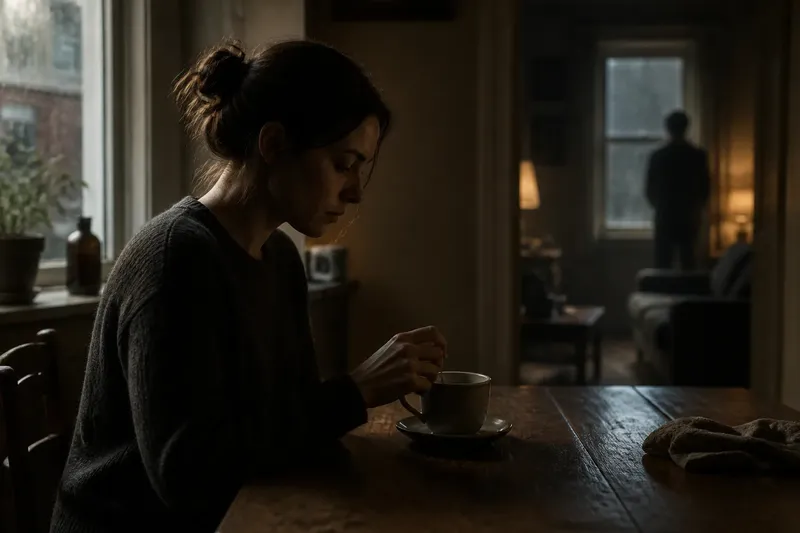
A quiet film scene can change the meaning of a look without adding a word. Room tone, a sleeve brushing a chair and the sudden absence of a familiar sound all direct attention; silence is not a blank space but a choice about what the audience can hear.
That choice has several forms. A scene may retain the ordinary noise of its setting, isolate a few small sounds, or strip the soundtrack back until near-silence becomes conspicuous. Each approach asks the viewer to listen differently, and each suits a different dramatic purpose.
What does silence mean in a film scene?
In cinema, silence rarely means literal absence of sound. Even a passage without dialogue may contain room tone: the low, continuous acoustic impression of a location. A kitchen might carry a refrigerator hum; an office might have distant ventilation; an outdoor scene may hold wind or traffic.
Those sounds establish a baseline. Once the audience has heard it, a change becomes legible. If a hum stops, a clock becomes prominent, or a character’s breathing is suddenly exposed, the soundtrack has made a selection. The viewer may not consciously name the shift, but it can make the moment feel tense, intimate or strangely suspended.
Quiet also changes the weight of performance. A pause before an answer can feel like hesitation when the room remains audible, or like a deliberate confrontation when everything else falls away. The sound does not dictate one interpretation; it guides attention towards details that help the scene carry one.
When should a scene keep its room tone?
Keeping the natural acoustic bed is usually the most unobtrusive choice. It suits scenes where the location should remain present and the character’s behaviour needs to feel observed rather than underlined. Ordinary ambience gives the audience a stable world in which a glance, a pause or a small change of posture can register.
Room tone can also make a scene feel socially exposed. A character who says nothing in a busy café is still surrounded by clatter and conversation. Their silence belongs to a public place, where other people might notice it. In a quiet corridor, the same pause may feel private, because the space offers fewer competing signals.
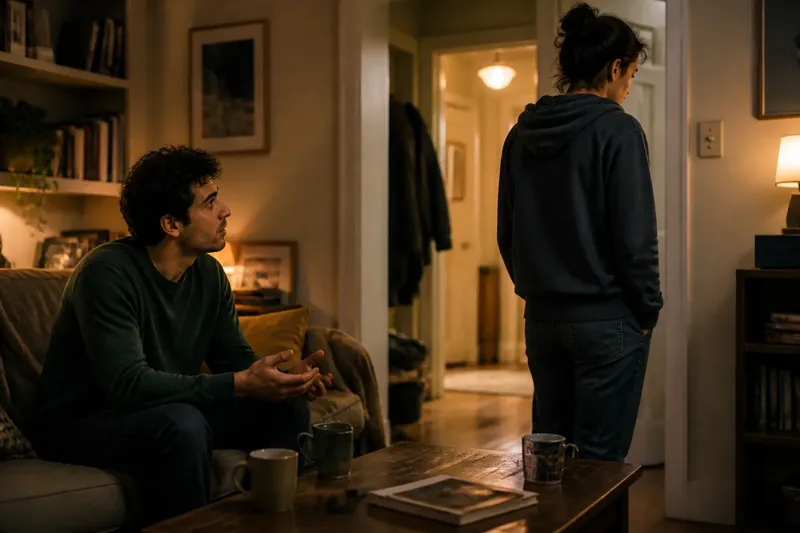
Imagine a fictional scene in which a student waits outside a closed classroom after an argument. If faint footsteps and distant voices remain audible, the setting feels active while the student stays still. The expected effect is that the viewer attends to the contrast between the moving school and the character’s reluctance to enter, rather than assuming the world has stopped.
This approach suits grounded drama and scenes that depend on a recognisable environment. It is less suited when ordinary ambience would distract from a tiny sound the story needs the audience to notice.
When should small sounds take the foreground?
A scene can keep its acoustic bed but bring one or two details forward. A cup touching a saucer, fabric shifting, a latch turning or a breath caught in the throat may become more prominent than the surrounding room. Such sounds work best when they have a clear relationship to the character’s immediate action or attention.
Foregrounding a sound can make a quiet passage tactile. The audience hears an action as well as seeing it, which can lend a moment precision without dialogue. It can also expose an effort to remain composed: a carefully placed glass or an uneven breath may tell us more than a spoken explanation would.
Use this approach when a character’s attention narrows, or when an ordinary action has acquired emotional weight. Avoid making every small noise prominent. If each movement is emphasised, the listener has no reliable sense of which detail matters, and the quiet can start to feel artificially busy.
A useful distinction is whether the sound belongs to the room or to the character’s focus. Room tone says, “This is where we are.” An isolated detail says, “Notice this now.”
When does near-silence become the stronger choice?
Near-silence removes most of the expected acoustic texture, leaving little more than a faint bed or a nearly inaudible trace. Because viewers are accustomed to hearing some sense of place, the reduction itself can feel like an event. It may suggest shock, isolation, concentration or a break from the scene’s usual sensory pattern.
This approach is most effective when the absence has a reason the audience can feel. A character may be so absorbed that the surroundings seem to recede, or a sudden loss of sound may mark a change in perception. In either case, near-silence should be a contrast, not just a synonym for seriousness.
There is a trade-off. Strip away too much and the moment can become vague, or suggest that the film has simply muted the scene. A trace of room tone can preserve a sense of space while keeping attention tightly held. The choice depends on whether the scene needs the audience to feel the world continuing or to experience its apparent withdrawal.
How should you choose the right kind of quiet?
Start with the viewer’s task. Ask what they should notice during the passage: the location, a specific action, or the experience of sound dropping away. Then choose the least intrusive approach that supports that attention.
- Keep room tone when place and social context matter more than a single sound.
- Foreground a small sound when a physical action or change in attention needs extra clarity.
- Use near-silence when the absence itself should mark a shift in perception or mood.
- Check the transition into and out of the quiet. A gradual reduction feels different from an abrupt cut, so decide whether the audience should notice the change.
- Listen for competing details that pull attention away from the intended focus, then decide whether to retain them as useful context.
For attentive viewing, make the same distinction in reverse. First listen for the steady background; then notice whether a particular sound rises above it; finally ask whether anything has been withheld. This gives you a practical way to describe what a quiet passage is doing without mistaking low volume for emptiness.
What questions help you read a quiet scene?
Is room tone the same as silence?
No. Room tone is the continuous acoustic impression of a setting, even when no one speaks. A scene can feel quiet while retaining that bed of sound.
Why does a tiny sound seem unusually loud?
It may be foregrounded against a restrained background, or your attention may have narrowed with the character’s. The contrast makes the detail easier to notice without requiring a loud sound.
Does near-silence always signal tension?
No. It can suggest focus, distance, grief, relief or a change in perception. The scene’s performance and surrounding context shape which reading feels plausible.
How can I tell whether silence is deliberate?
Notice whether the sound pattern changes at a meaningful moment and whether the resulting quiet directs attention somewhere specific. If the absence has a clear relationship to the scene’s action or feeling, it is doing expressive work.
What should you listen for on a rewatch?
Track one element at a time. On one viewing, attend to the background bed: does it establish a busy, enclosed or open space? On another, follow the small sounds and note whether they coincide with a character’s movements or changes in attention. Finally, notice any sudden thinning of the soundtrack and what the scene asks you to observe at that point.
This is not a hunt for a hidden code. A sound may simply make a room feel occupied, give a pause texture or leave a performance room to breathe. The useful question is what your attention does when the sound changes.
The myth that silence means nothing falls apart once you compare these choices. Room tone keeps the world present; a small sound brings one detail forward; near-silence makes absence perceptible. When you watch a quiet scene, listen for which of those jobs the soundtrack is doing, and you will hear more than the dialogue that never arrives.